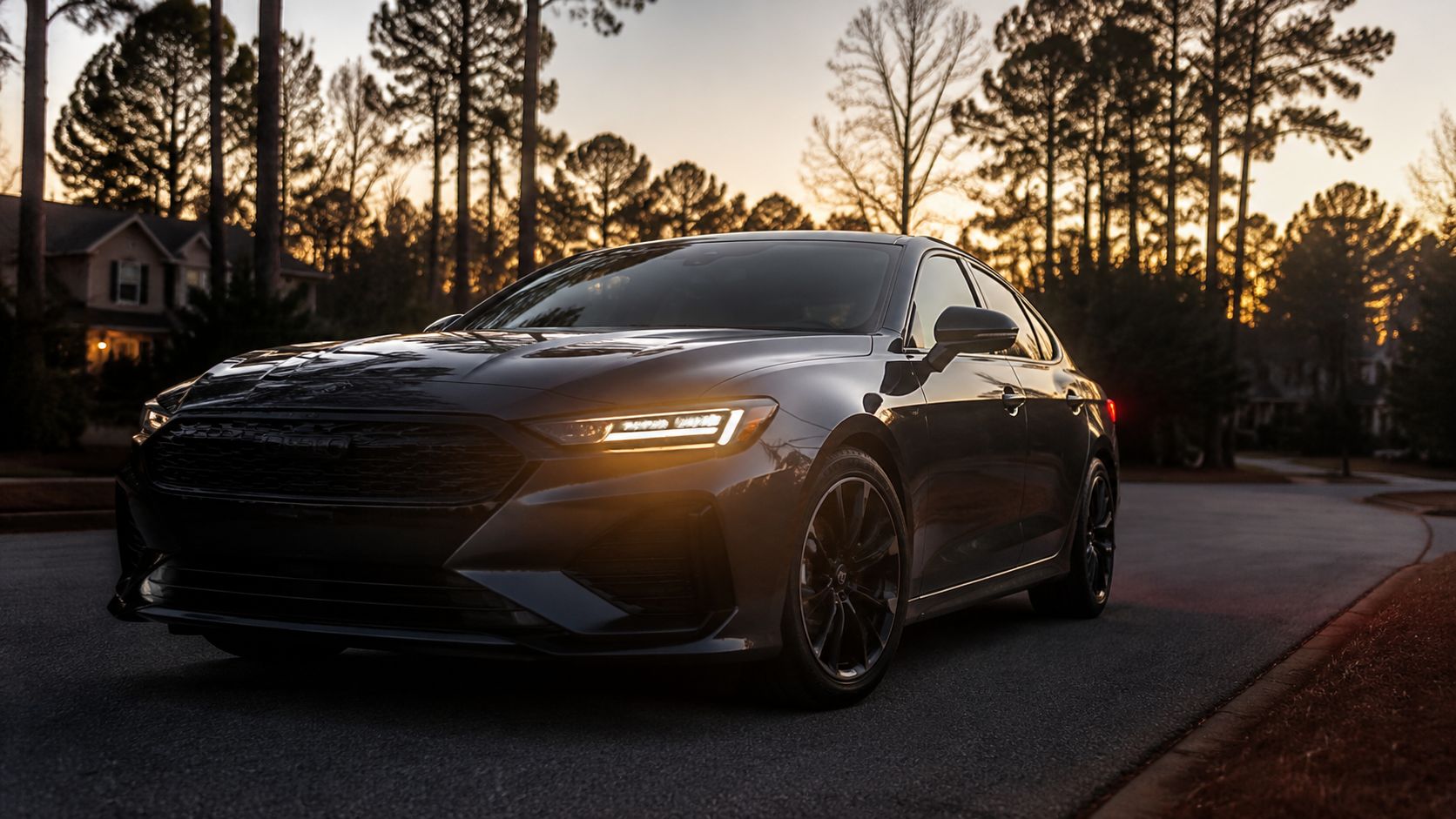
You've probably seen it in a parking lot in Woodstock, at a light in Kennesaw, or outside a shop in Canton. A sedan or truck rolls by with smoked taillights, darker headlights, and a cleaner, more custom look than stock. For a lot of drivers, that's the moment the idea starts. “I want my car to look like that.”
That reaction makes sense. A tinted lights car can look sharper, more coordinated, and less factory-plain. Smoked lenses can tie together black trim, wheels, badges, and window tint in a way that looks intentional instead of pieced together.
But light tint isn't the same as window tint. With lights, the style choice sits right on top of a safety item. If the film is too dark, the spray is uneven, or the part itself is low quality, the result can look good in daylight and perform badly at night. Around North Metro Atlanta, where you're dealing with daily commuting, rain, traffic, and local enforcement, that matters.
Enhancing Your Ride An Introduction to Tinted Car Lights
A common North Atlanta scenario goes like this. Someone gets their windows tinted, maybe adds black wheels or deletes chrome, then looks at the car and realizes the lights still look too bright or too red compared with the rest of the build. The next step is usually searching for a way to smoke the headlights or taillights without making the car look cheap or getting pulled over in Cherokee or Cobb County.

That's where many drivers encounter a similar dilemma. They want the look, but they're not sure what method makes sense, how dark is too dark, or whether the car will still be safe to drive at night. If you're also dealing with a cracked lens or weak lamp output, it helps to separate styling from actual lighting issues. For example, a resource like Plano auto light repair is useful for understanding when the underlying issue is the lamp system itself, not the cosmetic finish on top of it.
Why the look is popular
Tinted lights work because they change contrast. On a white car, smoked lights can make the rear end look less busy. On a black SUV or truck, they help the lenses blend into the body lines. On sportier builds, they can make factory lights look closer to an OEM-plus style instead of an obvious aftermarket add-on.
People usually ask for one of three outcomes:
- A light smoke finish that tones down the lens but still looks close to stock
- A darker custom look for a more aggressive appearance
- A cleaner match with window tint, blackout trim, wraps, or wheels
A good light tint should look intentional in daylight and still read clearly as a working lamp at night.
What owners in Woodstock, Kennesaw, and Canton should keep in mind
The mistake is treating light tint like a purely cosmetic job. It isn't. Headlights and taillights have to communicate. Brake lights need to be easy to recognize. Turn signals need to stay crisp. Headlights need to stay useful when you're driving in rain or on darker roads outside the denser retail areas.
That's why the right question isn't just “Can I tint my lights?” It's “What can I tint, how lightly should I tint it, and what method gives me the look without creating a visibility problem?”
The Three Main Ways to Tint Your Car Lights
There are three common ways to create a tinted lights car look. Film goes over the lens. Spray coats the lens. Replacement housings swap the original part for a different one. These approaches are similar to wallpaper, paint, or replacing the fixture entirely.
Film overlay
Film is the most familiar option because it works a lot like a screen protector on a phone, except the surface is curved, exposed to weather, and more demanding to install cleanly. A sheet of smoked vinyl or light-tint film is stretched and laid over the lens, then trimmed and finished around the edges.
For most street-driven vehicles, film is the most practical place to start because it's removable. If you decide the shade is too dark, if the finish doesn't suit the car, or if you need to return to stock, the lens itself usually isn't permanently altered.
If you want a closer look at how film is used specifically on front lamps, this guide on film for headlights is a useful starting point.
Spray tint
Spray tint is closer to painting than wrapping. The installer applies a translucent coating to the outside of the lens, usually in multiple passes, then clears or finishes it depending on the product and process.
The appeal is obvious. Spray can create a very smooth blended look when it's done well. The problem is consistency. A rushed spray job can go blotchy, too dark at the edges, or heavier on one side than the other. Removal is also more involved than peeling film.
Pre-tinted or smoked replacement lenses
This is the parts-swap route. Instead of covering the original lens, you replace the assembly with a smoked or pre-darkened housing. It's like buying a new phone case instead of applying a skin.
This can look very clean if the part quality is good and the optical design remains usable. But part quality varies a lot. Some assemblies look sharp in photos and disappoint in person with poor fit, cheap plastic, or weak light projection.
Tinted Light Methods at a Glance
| Method | Application Process | Reversibility | Typical Finish |
|---|---|---|---|
| Film | Applied over the existing lens and trimmed to fit | High | Light smoke to darker smoked appearance |
| Spray | Coated onto the lens surface in layers | Low to moderate | Smooth custom finish if applied well |
| Replacement lenses | Factory light assembly is removed and replaced | Moderate | OEM-style smoked look, depends on part quality |
Shop-floor reality: Film gives the most flexibility. Spray commits you faster. Replacement parts can look great, but only if the housing quality matches the car.
Tinted Lights and Georgia Law Staying Safe and Legal
Any material placed over a lamp affects light output. That's not opinion. It's the core trade-off in light tinting.
On a daily driver around Woodstock, Kennesaw, or Canton, that trade-off matters fast. A taillight that looks fine in a driveway photo can read much dimmer in rain on Highway 92, in stop-and-go traffic on I-575, or on a dark two-lane road heading out of Canton. That is why I tell customers the same thing in the shop. If the light output starts to look delayed, muddy, or weak, the tint has gone too far.
For tinted automotive lights, the technical issue is simple. Darker tint reduces visible output and can shorten the distance at which other drivers recognize your brake lights or turn signals. A lighter smoke is usually the safer limit for a street car, as noted in this taillight tint guidance.

Georgia law is less simple for lights than for windows
Drivers often try to apply window tint logic to lights. That causes confusion. Window tint is measured by Visible Light Transmission, but exterior lamps are judged more by whether they still perform their safety function and remain plainly visible.
In Georgia, the problem is not just how dark the lens looks. The issue is whether your headlights, brake lights, and turn signals still do their job without forcing other drivers to guess. That leaves some gray area in enforcement, and gray areas are not where you want to be after a traffic stop or rear-end collision.
In North Metro Atlanta, I would treat that gray area conservatively. Local roads, weather, and traffic density make marginal visibility a bigger risk than it might be in a dry, flat area with lighter traffic.
What safe and legal usually looks like on the street
A street-driven vehicle needs clear priorities:
- Brake lights come first. If they look weak in daylight, the setup is too dark.
- Turn signals need a clean flash pattern. If the light looks smeared or dull, the material or installation is a problem.
- Headlights still need to help you see. A darker look is not worth giving up usable night vision.
I also tell customers to check the car from normal following distance, not from three feet away in a garage. That is how other drivers see you.
If you want a closer look at where appearance upgrades can cross into legal trouble, this guide on whether headlight tint is legal in Georgia breaks it down in plain language.
North Atlanta conditions raise the stakes
A lot of national articles skip the local driving context. That is a mistake. In Woodstock, Kennesaw, and Canton, you deal with wet pavement, shaded back roads, heavy commuter traffic, and early winter darkness. Under those conditions, small losses in light output are easier to notice and harder to justify.
That is why the safest light-tint setups in this area usually stay mild. Clean, light smoke can work. Blacked-out lamps usually create more risk than value.
Choosing Your Method Film vs Spray vs Lenses
The right method depends on what you care about most. Some drivers want reversibility. Some want the darkest possible show-car look. Others just want a mild smoke effect that doesn't create headaches later.

Appearance and optical quality
Film usually wins for balance. A good film can give you a clean smoke finish without making the lens look buried under paint. It also gives you more control over how aggressive the final look becomes.
Spray can look smooth from a distance, but it's less forgiving. If the coat is uneven, you'll often notice it at night first, not in the driveway. That matters because low-quality films or poor spray jobs can scatter light unevenly, causing a smeared appearance at night and reducing the crispness of turn signals or brake lights, as noted in this discussion of optical quality and haze issues.
Replacement lenses can look the most factory-like when the part is well made. They can also look the cheapest if the plastic quality, fit, or internal reflector design is poor.
Durability and removability
Here's the practical ranking for most daily drivers:
- Film is easiest to reverse. That's a major advantage if you change your mind or need to correct the shade.
- Spray tends to be the most committed option. Removing it can take work, and mistakes are more expensive in time.
- Replacement housings are removable in the sense that you can swap parts back, but that assumes you've kept the originals and the aftermarket part didn't create other fitment issues.
If you want to see one application method in motion, this walkthrough is a useful visual reference.
Cost and value
I'm not going to invent pricing because it varies by vehicle, product, and how far you're taking the job. But the pattern is consistent.
Film usually makes sense for drivers who want a controlled cosmetic change without permanently altering the lens. Spray can look inexpensive at first, then become expensive when the finish ages poorly or has to be corrected. Replacement lenses can cost more up front, especially if you're chasing a specific OEM-style appearance, but ultimately, the question is whether the part quality supports the price.
Practical rule: Don't choose the darkest option in the photo. Choose the lightest option that still gives the car the attitude you want.
Which method fits which owner
- Daily commuter in Kennesaw: Light film is usually the safest match.
- Weekend vehicle in Canton: You may tolerate a more stylized setup, but visibility still has to stay usable.
- Show-focused build in Woodstock: Replacement housings or darker film can make sense if the car isn't driven like a normal commuter.
Why a Professional Tint Installation Matters in North Atlanta
DIY light tint usually fails in one of two ways. It either looks bad up close, or it looks fine up close and performs badly at night. Sometimes both.
Film installs go wrong when the material is overstretched, trapped air gets left behind, edges lift, or the cut lines don't follow the lens cleanly. Spray goes wrong when the coats build unevenly, runs form, or the final shade ends up darker than intended. Once that happens, the correction process is where people realize they would've spent less time and frustration by having it done properly the first time.

The biggest issue isn't cosmetics
Risk is functional. Any tint that materially reduces brake-light brightness may create a safety downside, so buyers should ask for measurable transmission data or choose the lightest cosmetic film, as explained in this article on headlight and taillight tinting safety trade-offs. That point matters even more in Georgia, where modified signal lamps and window tint aren't judged the same way.
A professional installer should know how to keep the look subtle enough for a street car, how to avoid optical defects, and when to tell a customer no. That last part matters. If someone is willing to black out your brake lights without discussing visibility, they're selling appearance and ignoring the purpose of the part.
Why local experience matters in Woodstock, Kennesaw, and Canton
North Atlanta drivers don't need generic advice from a national article written for every state at once. You need someone who understands local driving conditions, local expectations, and the kind of finish that works on a daily-driven car in Cherokee and Cobb counties.
That includes details like:
- Vehicle use. A weekend Mustang and a family SUV shouldn't be treated the same.
- Road conditions. Rain, glare, and night driving expose bad tint choices fast.
- Turnaround needs. A lot of owners want same-day work because this is usually one item on a larger styling plan.
For owners comparing options in the area, The Tint Guy is one local shop focused on automotive tint services in North Metro Atlanta, including headlight tint and related film work.
A clean install isn't just bubble-free. It has to preserve the lamp's job after dark.
Long-Term Care and How to Remove Light Tint
A light tint job can look clean on day one and become a problem later if it is not maintained. Around Woodstock, Kennesaw, and Canton, I see the same pattern. Heat, pollen, road grime, and strong summer sun wear on light film faster than many drivers expect. As the material ages, the lens can look hazy, the edges can start lifting, and the lamp can lose clarity at night.
That matters more on lights than on glass. A small change in appearance is one thing. Reduced brightness or a muddy brake light is another.
How to keep tinted lights looking right
Good care is simple, but it has to be consistent.
- Wash with mild soap and a soft microfiber towel. Rough pads and aggressive scrubbing can scratch film and mar sprayed coatings.
- Keep harsh cleaners off the lens. Solvents and strong degreasers can dry out edges, stain some films, or dull the surface.
- Check the edges every few weeks. If you catch lifting early, you may be able to keep dirt and water from getting under the film.
- Look at the lights after dark. Park near a wall, turn the lights on, and compare left to right. If one side looks dimmer, blotchy, or cloudy, the tint may be breaking down.
North Georgia weather is hard on anything applied to the outside of a vehicle. If the car lives outside full time, expect to inspect tinted lights more often than a garage-kept weekend car.
When removal makes sense
Removal usually comes up for three reasons. The film is failing. The shade is darker than it should be for street use. Or you bought a vehicle with someone else's old tint job and do not trust what is on the lens.
Film is usually the most forgiving option to remove. Warm it first, lift a corner carefully, and peel it slowly. If you rush, the adhesive tends to separate and stay behind in small patches, which turns a simple job into a cleanup job.
Spray tint is less predictable. Some products soften with the right remover. Others fight you the whole way and tempt people into scraping plastic lenses with too much pressure. That is how clear lenses end up scarred, streaked, or permanently dull.
A careful approach to removal
Start with the least aggressive method and pay attention to how the lens responds.
- Use heat before tools. Gentle heat helps soften adhesive and lowers the chance of gouging the lens.
- Test one small area first. This matters even more on older vehicles and sprayed lenses.
- Stop if the plastic starts hazing or smearing. At that point, the lens surface itself may be reacting, and forcing it usually makes the repair more expensive.
For a general walkthrough on adhesive film removal, this guide on how to remove car window tint covers the same slow, careful process that applies to light film.
For drivers in Woodstock, Kennesaw, and Canton, the practical rule is simple. If the tint no longer looks clear, clean, and even at night, it is time to repair it or remove it. Tinted lights should still let the lamp do its job in traffic, in rain, and on dark North Atlanta roads. If you want a second opinion before peeling anything off, The Tint Guy works with local drivers who need a realistic answer on whether a light tint can be saved or should come off.