A lot of drivers start thinking about clear bra installation right after the same moment. They hear a sharp ping on the highway, glance at the hood when they get home, and find the first chip in paint that was spotless that morning. Around North Atlanta, that usually happens on a daily route, not on some dramatic road trip. It might be I-575 through Woodstock, a run across Kennesaw, or a commute back toward Canton behind a dump truck or a lifted pickup throwing grit.
That's why paint protection film matters. It isn't a styling extra for garage-kept exotics. It's a practical barrier for people who drive their cars and want the paint to keep looking like it should.
Protecting Your Investment on Georgia Roads
You see it all the time around North Atlanta. A car owner buys a new truck, SUV, or performance car, drives it for a few weeks through Kennesaw or Woodstock, and the front edge of the hood already has its first chip. After that, every wash turns into an inspection.
Clear bra, also called paint protection film or PPF, prevents that cycle by putting the abuse on the film instead of the paint. On Georgia roads, that means gravel off the shoulder, bug impact on the front bumper, road film, and the steady sun that works on exposed paint day after day. Owners usually start with appearance. The bigger reason is cost control. Preserved factory paint is easier to maintain, easier to correct later, and far less expensive than repainting panels that were chipped early.
Modern film is built for real use. Quality PPF is typically made in thicknesses measured in mils, with many products falling in the 6 to 8 mil range, and many premium films are designed with UV-resistant topcoats and self-healing properties, as explained in this XPEL overview of paint protection film construction and performance.
What drivers around Woodstock and Kennesaw are really protecting against
Rock chips get the attention first, for good reason. They are the most visible damage on daily-driven vehicles. But they are not the only reason smart owners cover the front of the car.
- Impact-heavy panels: Front bumpers, hood leading edges, fenders, mirror caps, A-pillars, and rocker panels collect the most abuse in normal driving.
- Sun and heat: Cars parked outside in Canton, Woodstock, and Kennesaw spend long hours under strong UV and high surface temperatures.
- Bug acids and road contamination: Bugs, bird droppings, sap, and traffic film are easier to clean off film than off bare paint that has already started to mark.
- Long-term appearance: Repeated minor hits dull the front of a vehicle even before major chips force repair.
The trade-off is simple. Film costs money upfront. Paintwork costs more later, and repainted panels rarely match the durability and consistency of original factory finish.
Why installation quality matters as much as the film
Film brand matters. Installation quality decides whether the protection holds up.
A rushed job can leave edges lifting, fingers in the film, trapped debris, stretch marks, or cut lines in places no owner should ever have to accept. I have seen cars come in from around Woodstock and Kennesaw with decent material installed badly, and the owner ends up paying twice. First for the original install, then again to remove failed film, correct the panel, and start over.
Coverage level affects cost too. Full-front packages protect the areas that take the most impact. Full-body coverage costs more because labor, material use, panel complexity, and finishing time all increase. Consumer pricing guides from installers and automotive detailing shops commonly place partial front packages in the lower thousands, while full-body installations can run several thousand dollars more depending on vehicle size and film choice, as outlined in this PPF cost guide from Kelley Blue Book.
For drivers in Canton, Kennesaw, and Woodstock, that is the part that gets missed. Cutting corners on installation usually does not save money. It delays the bill until the film fails, the paint gets marked, or the front end needs correction work that could have been avoided.
The Foundation of a Flawless Finish Vehicle Preparation
A black truck rolls in from I-575 looking clean at first glance. Under inspection lights, the story changes. Pollen is packed into the hood edges, road film sits low on the bumper, and there is old wax built up around the emblems. If film goes on over that, the install may look decent for a day or two, but the weak spots show up later as lift, trapped debris, and edges that never settle the way they should.

What proper prep actually looks like
Vehicle preparation starts well before the film is unrolled. The paint gets washed correctly, decontaminated, dried thoroughly, and inspected under strong lighting from multiple angles. Good prep also includes the places casual cleaning misses, such as panel edges, trim lines, grille openings, washer nozzles, and the tight corners where grime hides.
That work has a purpose. PPF adhesive needs clean, stable paint to bond the way it was designed to. Residue from waxes, sealants, polishing oils, bug remover, and hard water can all interfere with that bond or distort the finish once the film is laid down. XPEL's installation guidance makes the same point in its paint protection film installation overview, and it lines up with what experienced installers see every week in the shop.
A proper prep routine can also include badge removal, clay or chemical decontamination, and selective polishing if the panel needs it. Shops that explain their paint protection film installation process usually spend real time on prep for one reason. The final result depends on the surface underneath, not just the film on top.
Why paint correction is part of the job
Film protects the paint. It does not erase defects already in it.
Swirls, haze, random isolated scratches, and etched water spots stay visible under PPF, especially on black, blue, and other dark colors. In some cases, the film can make those defects easier to notice because the surface becomes glossier and more uniform around them. That is why experienced installers inspect first and talk clearly about correction before installation, instead of treating it like an optional add-on with no bearing on the outcome.
That matters around Woodstock, Kennesaw, and Canton because local cars deal with a rough mix of pollen, red clay dust, summer heat, and highway grime. A hood can feel smooth enough to the owner and still have bonded contamination that will interfere with clarity or adhesion.
Common prep mistakes usually fall into a few categories:
- Contaminated edges and seams: Dirt left in those areas often shows up later as lifting or visible debris.
- Old wax, sealant, or polishing oils: These can keep adhesive from making uniform contact with the paint.
- Moisture left around trim and mirrors: Water hidden in creases can run out during install and upset placement.
- Defects left in the clear coat: The car leaves protected, but the finish still looks tired.
If the surface is compromised before install, the film locks that condition in place.
The hidden cost of cutting corners
At this stage, cheap work gets expensive.
A rushed prep job can pass a quick pickup inspection because the panel is wet, the light is soft, and the owner is focused on the fresh look. A week later, the same car sits in direct sun in Kennesaw or Woodstock and the problems become obvious. Silvering at the edges, trapped lint, poor clarity near emblems, and lift starting in the corners usually trace back to surface prep, not bad luck.
The long-term cost is what owners feel most. Failed film has to be removed. The panel may need adhesive cleanup, polishing, or correction before new film can go back on. If a blade was used carelessly around dirty edges, that repair bill climbs even faster.
Good preparation costs more up front because it takes time, judgment, and patience. It also gives the film the best chance to stay clear, stay bonded, and age properly on a daily-driven vehicle. That is the difference between an install that still looks right months later and one that starts coming apart as soon as Georgia weather and road grime put it to work.
The Art of Application A Look at the Pro Installation Workflow
The actual application is where people realize clear bra installation isn't just “apply and smooth.” A clean result depends on controlling alignment, moisture, tension, edge finish, and final bond in a very specific order. Skip steps or change the sequence, and the panel usually tells on you.
A simple visual helps show how the workflow fits together.

Pattern install or bulk install
Most professional shops work from one of two approaches. They either use pattern installations or bulk installations. Patterned film is machine-cut for a specific vehicle panel. Bulk installation uses larger raw film sections and allows more custom wrapping and trimming.
Pattern work gives predictable fit and consistency. Bulk work can create a more tucked, integrated result in experienced hands, especially on difficult shapes. The trade-off is that custom work demands more skill, more time, and better judgment around curves, badges, sensors, and tight body lines.
For owners comparing options, visible seam lines and wrapped edges become key considerations. A cleaner edge often comes from better planning, not just from a more expensive film. If you want a closer look at what a dedicated service process includes, paint protection film installation details give a practical view of what shops mean by coverage and application work.
Why wet application is non-negotiable
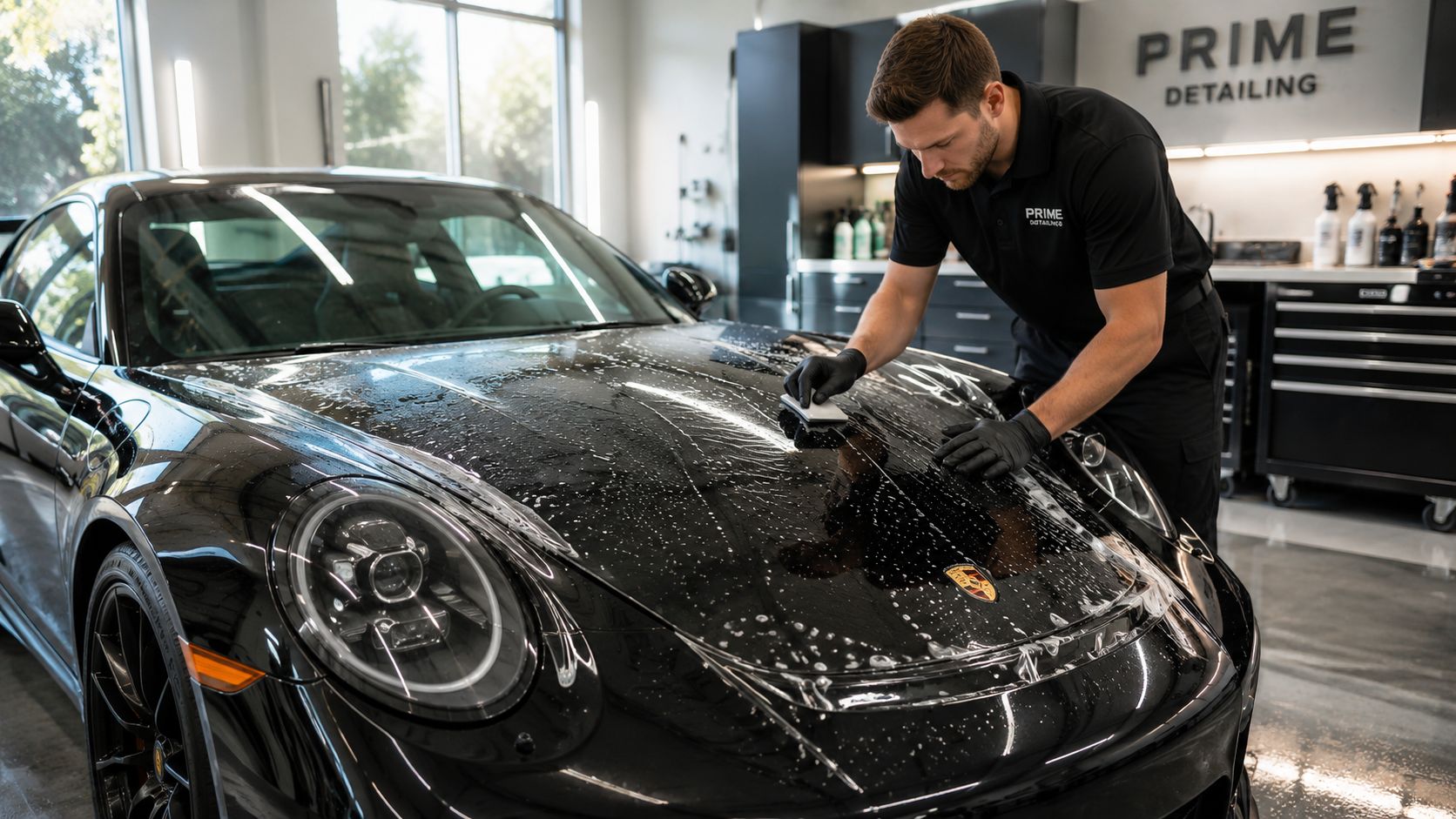
The most important technical step is the wet install method. The film and panel are sprayed with a 50% soap and water slip solution, which allows the sheet to float and stay adjustable during placement. Done correctly, the film can float for 10 to 15 minutes so the installer can align it by quadrant before locking it down.
That floating stage is what gives a pro room to work precisely. If that fluid layer isn't maintained before the final squeegee pass, common mistakes like air pockets and edge issues show up fast. The same verified technical guidance states that the wet application process, combined with proper squeegee pressure and final heat activation, produces a 98% first-time success rate, while drier methods drop sharply in reliability.
After the film is centered, the installer starts the bond with a controlled pass from the middle outward. Technical guidance for this process calls for 15 to 20 psi at the squeegee and a center-to-outward motion to push moisture away cleanly. The final heat activation at 120°F for 3 to 5 seconds per edge helps mold film to curves and secure the edges where failure usually starts.
Later in the process, this walkthrough is worth watching if you want to see why small movements matter.
The techniques that separate a clean install from a redo
Curved bumper corners, fender arches, and recessed areas are where experience shows. Film has to be managed, not forced. On these panels, installers use stretch and arc techniques to lay the material into shape without creating stress that comes back later as a wrinkle or lifting edge.
A few techniques matter more than most:
- Center first, edges later: Lock the panel into correct alignment before chasing corners.
- Use tack solution only where it belongs: It's for final edge control, not for flooding the whole panel.
- Change squeegee direction when body lines demand it: Straight strokes don't solve every contour.
- Heat the edge as a finishing step: That's what helps the film hold a complex shape instead of trying to return to flat.
A bumper can look fine when it leaves the bay and still fail later if the installer never removed edge tension.
The best application work looks calm. That's because the technician is following a repeatable process, not improvising through every panel.
DIY vs Professional Installation Weighing Your Options
DIY clear bra kits are appealing for one reason. They look cheaper at the start. For some owners, that's enough to try it. The problem is that most installation failures don't happen because the person lacked effort. They happen because PPF punishes small mistakes that aren't obvious until the film starts curing, shrinking, or lifting.
The biggest trouble spots are the same ones professionals watch most closely. Verified technical data shows that edge contamination and insufficient stretching account for 85% of post-installation failures, and when that creates a tension wrinkle on a panel, it leads to a 90% re-installation rate for those novice attempts. That's the kind of mistake that turns “saving money” into buying film twice.
Where DIY usually goes wrong
A garage install can work on a simple panel if conditions are clean and the installer is unusually patient. But that still leaves a long list of risk points.
- Contamination control: Dust, lint, pollen, and garage debris love adhesive surfaces.
- Stretch management: Curved sections need controlled tension, not guesswork.
- Edge finish: If the edge isn't sealed properly, the panel may start lifting long after the job looks done.
- Blade risk: Hand trimming near paint takes a steady hand and the right technique.
- Panel alignment: Once a large sheet starts grabbing in the wrong spot, recovery gets harder fast.
DIY and professional side by side
| Factor | DIY Installation | Professional Installation |
|---|---|---|
| Work environment | Often done in a driveway or garage with more dust and variable temperature | Done in a controlled shop environment built around clean application |
| Prep quality | Commonly rushed or limited to a wash | Usually includes deeper decontamination and paint evaluation |
| Film handling | Harder to align, stretch, and anchor cleanly on complex panels | Technician manages slip, tack, tension, and edge wrap deliberately |
| Cutting risk | Greater chance of poor trimming or accidental paint damage | Better process control and safer cutting habits |
| Finish quality | More likely to show trapped debris, haze, fingers, or edge lines | More likely to look uniform and hold up over time |
| Long-term cost | Can become expensive if failed film has to be removed and redone | Higher upfront cost, lower chance of paying twice |
For a broader owner-level decision framework, this guide on paint protection film pros and cons is useful because it frames the choice around trade-offs instead of hype.
Why professional work is usually the cheaper decision
If you're in Woodstock or Kennesaw and you use the vehicle daily, failed film is more than cosmetic. You've got the cost of the kit, the time to install it, the frustration of removing it, and then the cost of doing the job properly anyway. That's before you factor in the risk of cutting paint or sealing contamination under the film.
Most bad PPF jobs don't fail because the owner didn't care. They fail because the material demands more control than it appears to from a YouTube clip.
Professional installation isn't just paying someone else to do the labor. You're paying for clean conditions, repeatable technique, panel-specific judgment, and a result that doesn't need to be redone after the first hot month in Georgia.
Aftercare and Maintenance Keeping Your PPF Pristine
A clear bra installation isn't finished the moment the keys are handed back. The film still needs time to settle, cure, and fully stabilize at the edges. That early care window is where owners can either help the install last or accidentally create the first problem.

The first few days matter
Fresh film should be left alone long enough for the adhesive to settle properly. One installer source states that the film is safe for a gentle hand wash after 4 days, and that high-pressure washer nozzles should stay at least 24 inches away from film edges to reduce the chance of lifting, as explained in this clear bra care and washing guide.
That advice matters because edges are the most vulnerable part of the install. If a pressure nozzle is aimed too close, especially at a bumper edge or wrapped corner, water force can work against the bond before it has fully settled.
Smart maintenance habits
Long-term care doesn't need to be complicated. It just needs to be consistent.
- Wash gently at first: Start with a careful hand wash after the initial curing period.
- Respect the edges: Keep pressure away from seams and wrapped areas.
- Clean contamination quickly: Bug remains, sap, and droppings are easier to remove before they sit.
- Use soft contact materials: Clean microfiber towels and wash media reduce the chance of marring the top surface.
- Inspect occasionally: Catching a small edge issue early is easier than ignoring it until dirt builds in the lift.
For owners who want a more detailed owner-care routine, this guide to flawless paint protection film maintenance is a practical companion after installation.
What to watch for after delivery
It's normal for owners to stare at the film the first week. That's not a bad habit. Look closely at the leading edges, bumper corners, and tight recesses. You're not hunting for problems in a panic. You're learning what the film looks like on your vehicle so you can spot changes early.
Leave space between the pressure washer and the film edges. That simple habit prevents a lot of avoidable callbacks.
For daily drivers in Canton, Woodstock, and Kennesaw, good aftercare is what keeps the installation looking sharp through pollen season, summer heat, and routine washes. The film is built to protect the finish. A little discipline in the first days helps it do that job for years.
Protect Your Drive Get Expert Clear Bra Installation in North Atlanta
You pull onto I-575 in a clean, freshly corrected car. By the end of the week, the front bumper has seen gravel, bug acids, road film, and the kind of light impact that slowly roughs up unprotected paint. That is why clear bra installation is not just about getting film on the car. It is about getting the prep, fit, edge finish, and panel strategy right so the protection still looks right a year from now.
Modern vehicles punish shortcuts. Tight bumper contours, gloss black trim, parking sensors, and sharp body lines give installers very little margin for error. Around Woodstock, Kennesaw, and Canton, owners usually want the same outcome: stop the chip damage before it starts, keep the paint looking factory, and avoid paying for cosmetic repairs that could have been prevented with a proper install.
What local drivers should look for in a shop
A good shop should explain why it installs film a certain way. Ask how the paint is evaluated before film goes down, where edges can be wrapped cleanly, when a pre-cut pattern makes sense, and when hand trimming or bulk work is the better call. Those answers tell you a lot. If a shop cannot explain the reason behind its process, it is harder to trust the result once the car is out in the sun and every edge, corner, and stretch point is visible.
Cheap work usually costs more later.
I see the same avoidable problems on rushed installs. Silvering on contaminated paint. Lift lines around complex curves. Dirt collecting at exposed edges. Film placed too close to visible areas because the installer was trying to save time instead of fitting the panel properly. The owner pays once for the film, then again to remove, replace, or correct what should have been done correctly the first time.
For businesses in the automotive space, online visibility also affects which shops local drivers find first. This resource on optimizing auto repair shop SEO gives useful context on how service-area businesses build trust with nearby customers.
A practical local option
For drivers comparing shops in North Metro Atlanta, The Tint Guy offers paint protection film and related services through its PPF service page, along with automotive tinting for owners handling more than one upgrade at a time. The bigger point is not the menu of services. It is whether the shop can look at your specific vehicle, explain the coverage that makes sense, and install the film with the discipline that keeps it clean-looking over time.
That matters on Georgia roads. Front-end repaint work, chip touch-ups, and blend repairs rarely age like original paint, and they are usually more expensive than protecting high-impact areas early.
For Woodstock, Kennesaw, and Canton drivers, the smart next step is a panel-by-panel evaluation. Decide where the car takes abuse. Protect those areas with installation work that is done for long-term durability, not for a quick delivery photo.
If you're ready to protect your paint and want clear answers on coverage, finish, and long-term durability, contact The Tint Guy for a consultation on clear bra installation and automotive tinting in North Atlanta.